Ideal Interval Between Hair Colorations: Complete Guide to Planning Your Touch-Up
Discover the perfect timing to retouch your hair color, with recommendations based on technique type, hair health, and lifestyle. Keep your color vibrant without compromising your hair's health.
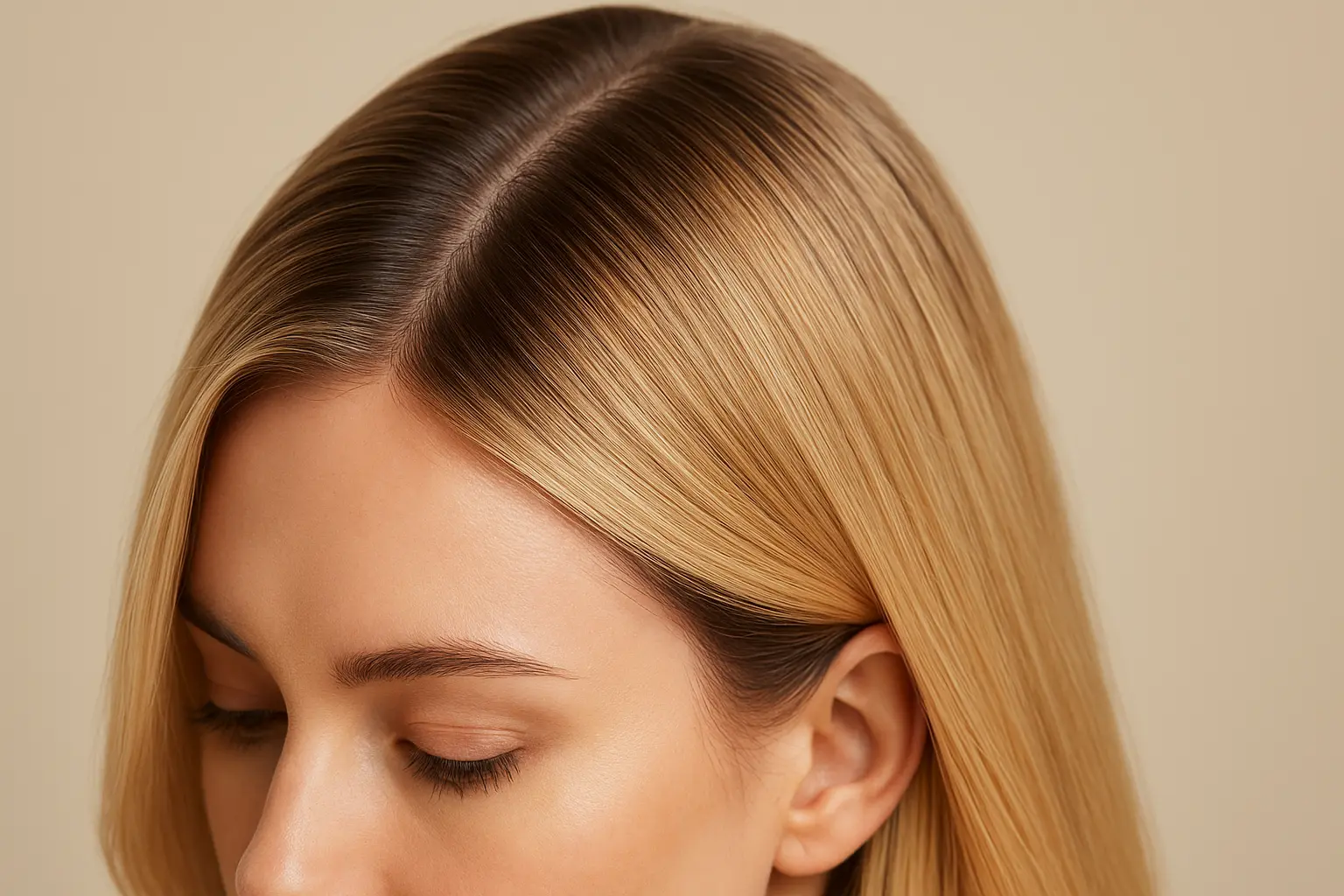
One of the most common questions in our salon is: "When should I color my hair again?" The answer isn't one-size-fits-all — it depends on various factors such as the technique used, root growth, hair condition, and your personal preferences. In this complete guide, we'll explain exactly when it's the ideal time to retouch your color, how to prolong color duration, and how to keep your hair healthy between colorations.
Table of Contents
Why the interval between colorations is important
The interval between colorations isn't just an aesthetic concern — it's fundamental for the health and integrity of your hair. When we color our hair too frequently, we expose the strands to chemicals that can cause cumulative damage: dryness, increased porosity, breakage, and loss of elasticity.
On the other hand, waiting too long between touch-ups can result in very visible roots (especially if you cover gray hair or have a large contrast between your natural color and the coloration), faded and uneven color, and a less polished look than you'd like.
The secret is finding the perfect balance: an interval that keeps the color fresh and the look impeccable, while also respecting the recovery time of the strand and minimizing long-term chemical damage.
Factors that influence the recommended interval
1. Root growth: average and variables
Hair grows, on average, about 1 cm per month (0.3 to 0.5 mm per day). However, this rate varies from person to person, influenced by:
- Genetics: some people naturally have faster or slower growth
- Age: hair tends to grow slower with aging
- General health and nutrition: nutritional deficiencies can slow growth
- Season: some studies suggest hair grows slightly faster in summer
2. Coloring technique used
The coloring technique you chose has a huge impact on the maintenance interval:
- Full permanent coloring: covers the entire head, requires root touch-up every 3-6 weeks depending on contrast
- Root touch-up only: keeps the lengths intact, ideal for those who want to minimize damage
- Highlights/lights/balayage/shadow root: low-maintenance techniques that allow 8-12 weeks (or more) between touch-ups
- Semi-permanent coloring or gloss: fades gradually, can last 6-10 weeks depending on washing
3. Hair type and condition
Your hair type and condition also determine how often you can safely color:
- Virgin and healthy hair: tolerates more frequent colorations without major damage
- Already chemically treated hair: (straightening, bleaching, perms) needs longer intervals
- Fine vs thick hair: fine strands are more fragile and may need more recovery time
- Curly/coily hair: tends to be more porous and can dry out faster, benefiting from longer intervals and intense hydration
4. Aesthetics and personal tolerance
Finally, there's an important personal component:
- Gray coverage: if you have a lot of gray hair, you may prefer more frequent touch-ups (3-4 weeks)
- Color contrast: a blonde root on dark brown hair is much more visible than tones close to natural
- Lifestyle and preferences: some people love the grown-out or shadow root look; others prefer always impeccable roots
- Budget and time: frequent touch-ups require more financial investment and salon time
Practical recommended intervals (with tables)
Based on years of salon experience and industry best practices, here are the practical interval recommendations between colorations, organized by technique and scenario:
Table 1: Full permanent coloring — when to touch up roots
| Scenario | Recommended Interval |
|---|---|
| Dense gray coverage (>50% gray) with visible contrast | 3-4 weeks |
| Moderate gray coverage or uniform color with moderate growth | 4-6 weeks |
| Tone-on-tone or close to natural coloring (low contrast) | 6-8 weeks |
| Damaged or chemically treated hair (needs recovery) | 6-8 weeks (minimum) |
Table 2: Highlights/lights/shadow root/balayage — low-maintenance strategy
| Technique | Recommended Interval |
|---|---|
| Balayage or shadow root (sombré/ombré) | 8-12 weeks or more |
| Traditional highlights with marked contrast | 6-10 weeks |
| Fine lights (babylights) integrated | 10-14 weeks |
| Refresh/gloss between main applications | Every 4-6 weeks (to maintain tone) |
Table 3: Semi-permanent coloring / gloss / toning
| Coloring Type | Recommended Interval |
|---|---|
| Semi-permanent coloring (ammonia-free) | 6-8 weeks |
| Gloss or toning to refresh color | 4-6 weeks |
| Temporary coloring (washes out with shampoo) | 2-4 weeks (or as needed) |
How to extend the interval between colorations without sacrificing the look
At-home care to maintain color
- Use shampoo and conditioner for colored hair: specific products help seal the cuticle and preserve pigments
- Wash hair with warm or cold water: very hot water opens the cuticle and releases color faster
- Apply nourishing masks weekly: keep the strand hydrated and color vibrant
- Protect from sun and chlorine: use UV protection sprays and wash hair after the pool
- Avoid daily washing: wash hair 2-3 times per week (or use dry shampoo between washes)
- Finish with cold water: helps seal the cuticle and increase shine
Salon maintenance between full colorations
- Intermediate gloss or toning: refreshes color without harsh chemicals, ideal 3-4 weeks after full coloring
- Partial root touch-up: instead of coloring everything, touch up only the first 2-3 cm of root
- Reconstruction treatments: cauterization, hair botox, or keratin help prepare the strand for the next coloring
- Evaluation consultation: book an evaluation for the professional to check strand health before repeating chemicals
Techniques and styles to postpone touch-up
- Opt for balayage or shadow root: these techniques create a gradual and natural transition, making root growth almost imperceptible
- Choose tones close to natural: the smaller the contrast between your natural color and the coloration, the less visible the growth will be
- Bet on hairstyles that disguise the root: side part, loose waves, or braids hide early growth well
- Use powders or sprays for temporary root touch-up: temporary products cover roots between appointments (ideal for grays or strong contrast)
- Consider a strategic cut: cutting hair regularly removes faded ends and gives a more polished look
How to safely prepare hair for new coloration
Before coloring your hair again, it's essential to assess the condition of the strands. Damaged hair doesn't accept color well, can break during application, and the final result will be uneven.
Strand test: Whenever you change color drastically or use a new product, do a test on a small section of hair 48 hours before. This allows you to detect allergic reactions and assess how the strand will react.
Assess porosity and damage: Very porous hair (that absorbs water quickly and dries fast) may need reconstruction treatments before new coloration. If the strand is elastic, brittle, or dull, postpone coloring and do a recovery protocol first.
- Deep hydration 1-2 weeks before: do masks rich in oils and proteins
- Avoid incompatible chemicals: don't do straightening or bleaching very close to a coloration (wait at least 2-3 weeks between procedures)
- Cut before coloring: remove split and damaged ends for a more uniform result
- After coloring: use leave-in, avoid heat tools in the first days, and maintain weekly hydration schedule
About the Author
Valentina Menella is a professional hairdresser specializing in colorimetry and advanced coloring techniques, with over a decade of experience. At Valentina Hair Concept in Lisbon, she dedicates herself to creating personalized colorations that enhance each client's natural beauty, always with the utmost respect for hair health and integrity.
Frequently Asked Questions
Can I touch up the color before 4 weeks? When is it justifiable?
Yes, it's possible in specific cases: if you have a very high percentage of gray hair and the contrast is very visible; if you're attending an important event and want to look impeccable; or if the color faded very quickly (may indicate a problem with the previous application). However, very frequent touch-ups increase the risk of damage. Always consult a professional to assess if it's safe.
What if my hair grows very fast or I have a lot of gray?
For hair with accelerated growth or lots of gray, we recommend: root touch-up every 3-4 weeks (only the root, not the full length); use temporary root touch-up products between appointments; consider techniques like shadow root that make growth less obvious; or embrace the grown-out root look, which is increasingly trendy!
What's the interval for hair that was bleached or platinized?
Bleached hair is more fragile and porous, requiring extra care and longer intervals. We recommend: minimum 6-8 weeks between bleachings; apply reconstruction and intensive hydration treatments between sessions; consider low-maintenance techniques like balayage to reduce frequency; and always work with a professional experienced in advanced colorimetry.
What's the difference between root touch-up and full coloring?
Root touch-up applies color only to the first 2-4 cm of new growth, sparing the length and ends that are already colored. It's faster, more economical, and less aggressive. Full coloring applies color throughout the hair length, used when you want to change tone, refresh faded color, or even out the color. Most clients do root touch-ups regularly and full coloring only occasionally.
I have damaged hair — how does this change the interval?
Damaged hair needs longer intervals (minimum 6-8 weeks) and a recovery protocol between colorations. Signs of damaged hair include: easy breakage, split ends, lack of shine, rough texture, tangles easily. Before new coloring, do: cauterization, keratin reconstruction, weekly hydrations, cutting damaged ends. If the damage is severe, you may need to temporarily suspend colorations and focus only on recovery.
Need help planning your next coloration?
Book an evaluation consultation with us. We'll analyze your hair condition, discuss your goals, and create a personalized coloring and maintenance plan to guarantee impeccable results and healthy hair.